Adwoa waited until after supper, when her father was relaxed in his chair, listening to the radio.
"Daddy," she said, "when we were at the farm, Nana told me about the odum tree. I didn't know any of that. Could you tell me more about our land?"
Kofi Mensah turned down the radio and smiled. "You want to know about the land? Good. But I am not the only one you should ask."
The Mensahs are a fictional family. Their story follows common situations that many Ghanaian families will recognise.
Why the conversation matters
Before a family can document or organise its land, someone has to gather what the family already knows. That starts with a conversation.
A respectful conversation can bring out history no document contains, show elders that the younger generation values what they have protected, and clear up confusion early.
The best time to ask is while the people who remember are still here and willing to share.
Start with the right person
In most homes, the natural place to begin is with a parent. Choose a calm moment, not a busy morning or a tense family occasion. Explain why you are interested. For example:
"I'd like to understand our land better, so I can help keep its history and records safe."
Your parent may then suggest that you speak to others too. That is normal and wise. On family land, your parents may share responsibility with the family head, elders or other relatives who have authority to decide on the family's behalf.
When Kofi heard Adwoa's question, he said: "This is family land. It doesn't belong to me alone. Your grandmother knows its history best, and Wofa Kwabena is the head of our family. We should involve them."
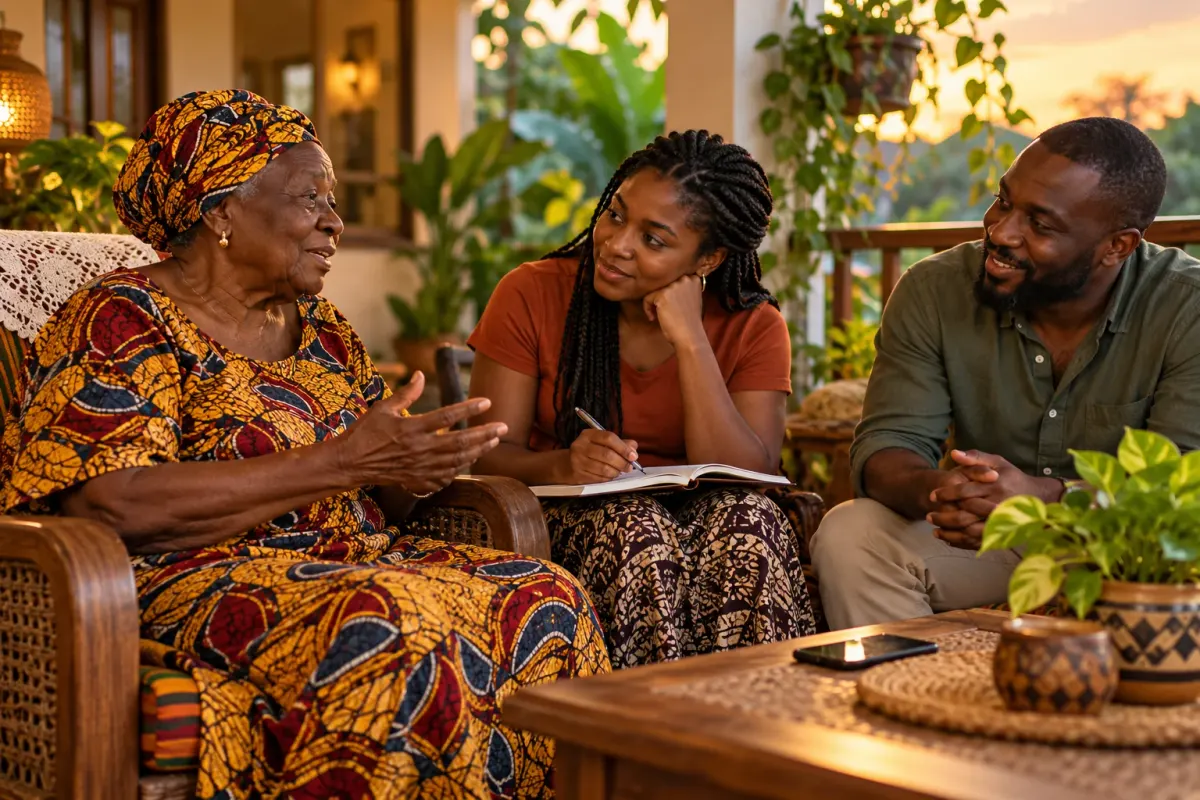
Four things to understand
Gently, over one conversation or several, try to learn about four things.
1. Where the land is. Which town or village? What landmarks mark its edges, such as a tree, a stream, a road or a neighbour's farm? Is it one piece of land or several?
2. Its history. How did the family come to hold it? Who farmed it first? Has any part been given, leased or sold over the years?
3. How it is used today. Who farms it, lives on it or looks after it? Does anyone outside the family use part of it, and on what understanding?
4. Who decides. Is this land held by the family, by an individual, or does it sit within land held by a stool, skin or clan? Who in the family has the authority to make decisions about it?
That last question needs care. Being a family member, or even farming the land, is not the same as having the authority to decide what happens to it. Land in Ghana can be held in different ways, and who decides depends on how the land is held. Your elders can explain how it works in your family.
Listen more than you speak
Elders often tell stories in their own way, with detours, memories and lessons along the way. Let them. Some of the most useful details come out of stories that seem to wander.
- Be patient. Don't rush to the "important" questions.
- Show respect. Use the greetings and forms of address your family expects.
- Don't argue or correct. If two relatives remember something differently, note both versions. It isn't your job to decide who is right.
- Know when to stop. If a question causes discomfort, leave it for another day.
If the conversation reveals a disagreement within the family or with neighbours, don't try to solve it yourself. Let your parents and elders decide how to handle it, and whether to seek proper help.
Record what you learn, with permission
Memories fade, and even a careful listener forgets. So ask if you may record what you hear.
You might take notes in a notebook, or ask permission to make a voice recording on your phone. Some elders are happy to be recorded; others are not. Always ask first, and respect the answer.
Adwoa asked Nana Akosua whether she could record their conversation. Her grandmother laughed. "Record me? Only if you promise to play it to your children one day." Adwoa promised.
Afterwards, write down the key points while they are fresh: names, places, dates (even approximate ones) and who told you what. Keep the notes and recordings private within the family.
How you can help
- Offer to be the note-taker whenever the land is discussed.
- Ask one question at a time, and come back another day for more.
- Keep your notes organised so the family can find them later.
- Share what you've written with your parents so they can correct anything you misunderstood.
Questions to raise at home
- "Who in our family should I speak to about the history of our land?"
- "Who makes decisions about our family land, and how are those decisions usually made?"
What comes next
When Adwoa asked whether any of this was written down, her father thought for a moment. "There is an envelope," he said, "in the wardrobe."
In the next article, What's in the Old Envelope?, we look at the documents families often keep, what they show, and how to keep them safe.